


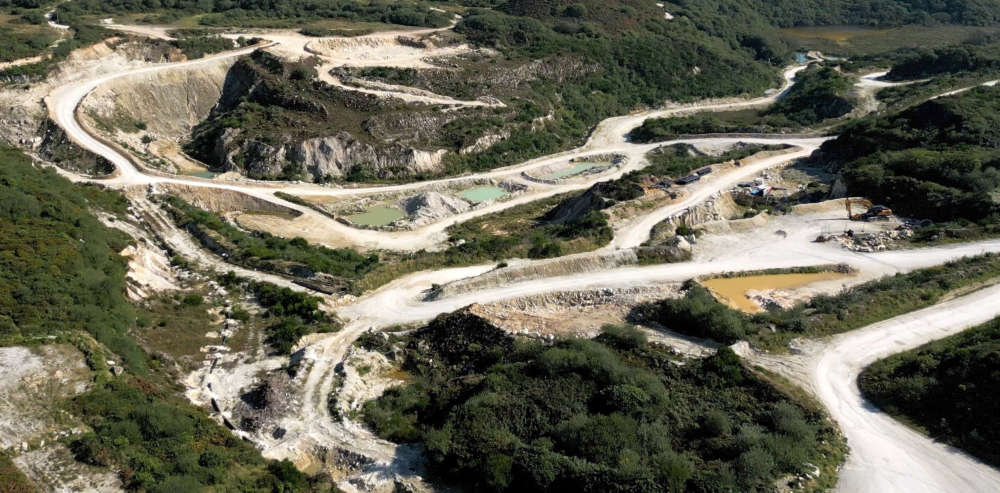
Cornish Lithium set to boost Cornwall’s economy by £3.8bn, create highly-paid career opportunities, revitalise the county's mining industry and contribute to a secure critical mineral supply for the UK
A newly released independent economic analysis by Public First highlights that Cornish Lithium’s proposed Trelavour Lithium Project at St Dennis, near St Austell, Cross Lanes Geothermal Lithium Project at Chacewater, near Truro, and a target of eight additional potential geothermal sites are, together, expected to contribute £3.8bn in Gross Value Added (GVA) to the Cornish economy, as well as create and sustain an estimated additional 700+ jobs in Cornwall over the next 25 years.
New job roles would span the full range of mining and minerals operations – from plant and process operators, maintenance and mechanical engineers, and laboratory technicians to environmental and health & safety specialists, logistics coordinators and site supervisors. 80% of these jobs would be open to those who had previously been locked out of well-paid, skilled employment in Cornwall because they had chosen to undertake vocational training rather than study for a degree; would still pay above the Cornish median salary and enable them to access careers that would position them in the top third of local earners. This would help to rebalance the local economy away from low-paid, seasonal work towards higher than average wages and more secure employment.
Nurturing local talent to access these jobs is essential to Cornish Lithium’s long-term aspirations, which is why its long-standing collaboration with the University of Exeter’s Camborne School of Mines, partnership with Truro & Penwith College to cultivate a specific, technical workforce and extensive STEM (Science, Technology, Engineering, Maths) outreach programme in schools to inspire the next generation are at the heart of the company’s plans to deliver economic growth for Cornwall.
A formal Benefit Sharing Policy would embed social value as a planned and measurable outcome of its projects and support training provision, scholarships and course development aligned with the critical minerals sector; ensure local business participation in project delivery, and provide further funding to improve community amenities and preserve Cornwall’s industrial heritage.
The wider national context of this analysis predicts a total of £5bn GVA to the UK economy and more than 1,000 jobs being created and sustained by Cornish Lithium’s projects.
The company’s Trelavour Lithium Project is projected to produce c. 10,000 tonnes of battery-grade lithium hydroxide per year over a mine life of at least 20 years, which would not only contribute significantly to a secure, responsibly sourced, domestic supply of this critical mineral, but also reduce the UK’s dependence on international imports from China, Chile and Australia in an era of elevated geopolitical turbulence.
Combined with its Lithium in Geothermal Waters projects, Cornish Lithium’s output could meet around 40% of the UK Government’s production target of 50,000 tonnes per year, required for planned battery capacity, by 2035. These projects also have the additional potential to provide low-carbon heating for around 29,000 Cornish households.
“Our projects could have a transformational impact on Cornwall’s existing job market as well as the career prospects of the next generation and, through supply chain engagement, benefit a broad spectrum of local and regional businesses,” explained Jamie Airnes, CEO of Cornish Lithium.
“With more than 700 highly-paid jobs anticipated locally and almost 85% of the supply chain spend expected to be retained in the south west, this report highlights the scale of the potential for Cornwall and the wider region as well as national industry.
"Cornwall has one of the largest lithium resources in Europe, along with the technology, skills and expertise needed to develop it responsibly, and the Government has recognised this opportunity. We have engaged with our local communities, tailored our plans in response to feedback and are ready to progress our fully costed, drill-tested, independently verified Trelavour Lithium Project to commercial production, subject to planning permission. We look forward to continuing to work with residents, businesses and politicians to bring this and our Lithium in Geothermal Waters projects to fruition, for the benefit of Cornwall and the UK as a whole.”
“There is, quite simply, no other growth industry in Cornwall that we can say is worth a couple of hundred million today but could credibly be worth north of a billion pounds in just a few years.
“That's why it's vital that we act now to secure this industry for Cornwall and ensure local people have the fullest stake possible in its spoils, across local infrastructure and skills development, job creation, and public and local ownership opportunities,” added Noah Law, MP for St Austell and Newquay, in whose constituency the Trelavour Lithium Project is situated.
Public First’s economic impact report was commissioned by Cornish Lithium and is based on a comprehensive feasibility study of the Trelavour Lithium Project, which provides detailed operational data, and extensive financial input from the company’s Lithium in Geothermal Waters projects.
It substantiates the operational and economic case for Cornish Lithium’s activities as it progresses towards planning applications and commercial production.
 Eden to pass on ‘Great British Summer Savings’ to visitors with VAT cut
 Cornwall shortlisted for national NHS award for putting patients at the heart of care
 Redruth to celebrate ‘Pride in Our Community’ at Murdoch Day 2026
 Cornwall green spaces to benefit from Grid giveaway
 Cornwall Airport Newquay leader takes next step after 11 years with the business
 Cornish Gems partners with The Thousand Year Trust to help restore Britain's temperate rainforests
 Global artists announced as special guests for biggest ever Eden Sessions line-up
 Ofsted Accreditation For Leading Cornish Outdoor and Summer Camp Provider