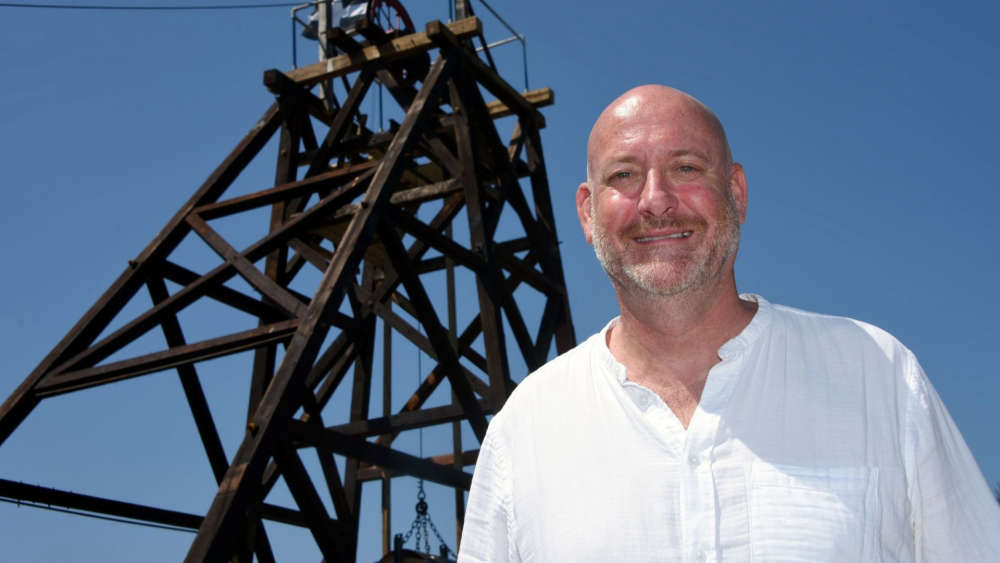
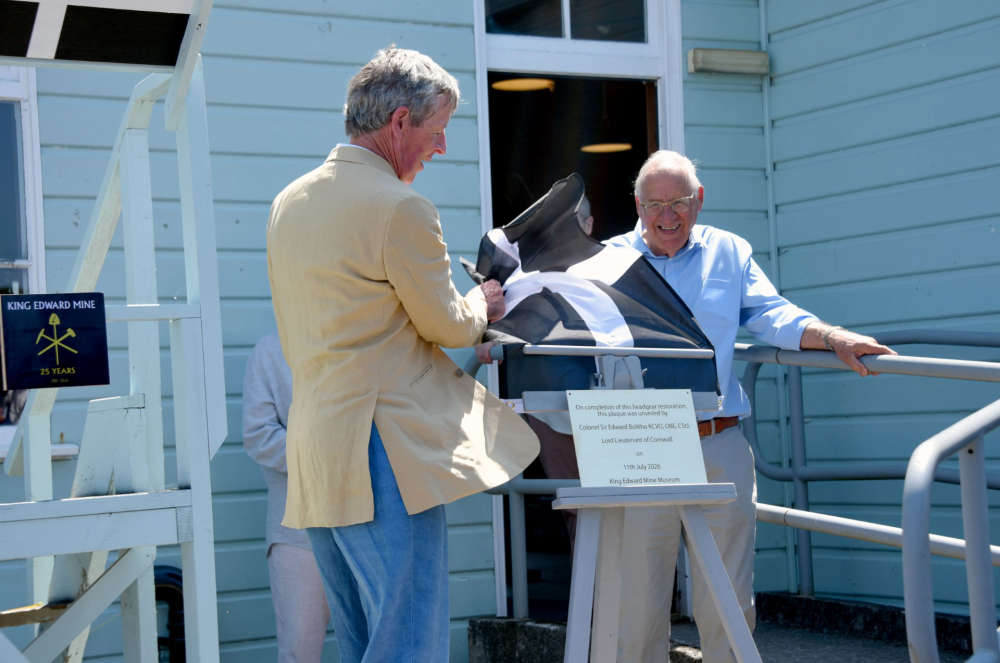
There was a palpable sense of Cornish pride as a plaque was unveiled to commemorate the new headframe at King Edward Mine Museum, with the flag of St Piran fluttering in the breeze on a beautiful summer’s day.
King Edward Mine (KEM) marked its 25th year as a museum on Saturday 11 July by celebrating the installation of a heritage headframe and honouring the talented volunteers who restored it.
The Lord Lieutenant of Cornwall, Colonel Sir Edward Bolitho KCVO OBE, presided over the occasion and unveiled a commemorative plaque.
Located in Troon, near Camborne, KEM is Cornwall’s best‑preserved mine site. Its buildings have been beautifully restored and now serve as a community hub for the Cornish Mining World Heritage area.
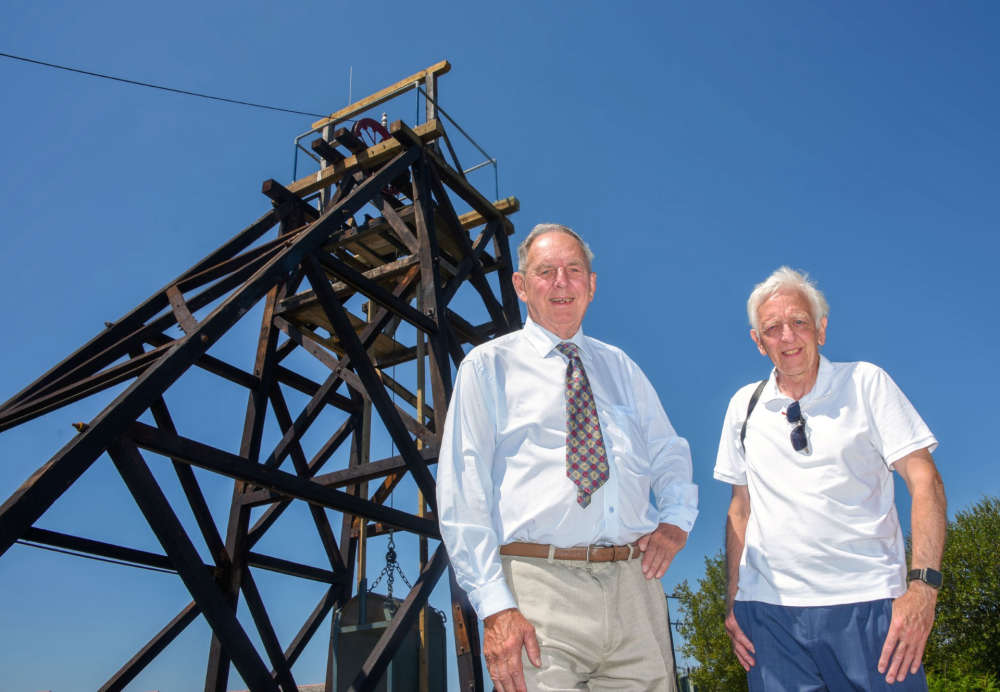
KEM is a charity whose aim is to celebrate Cornwall’s mining history by collecting, stewarding and interpreting historical and engineering heritage in ways that ignite curiosity, increase knowledge and inspire people of all ages and backgrounds to pursue careers in the UK’s growing geoscience sector.
KEM derives its income from opening to the public and receives no local authority or government funding. Its ten voluntary Trustees are responsible for maintaining 22 acres of mining landscape, a large number of operational mining machines and six Grade II* listed buildings.
A headframe is the structural framework positioned directly above an underground mine shaft. Its primary purpose is to lift mined ore to the surface so that it can be routed into mills or processing plants, but it also allows miners to safely enter and exit underground workings, directs fresh air into a mine, dispels hazardous gases and stabilises the entrance of the shaft itself.
In 1897, KEM was developed as a fully operational training mine by Camborne School of Mines (CSM), which used it as a teaching facility for more than 100 years.
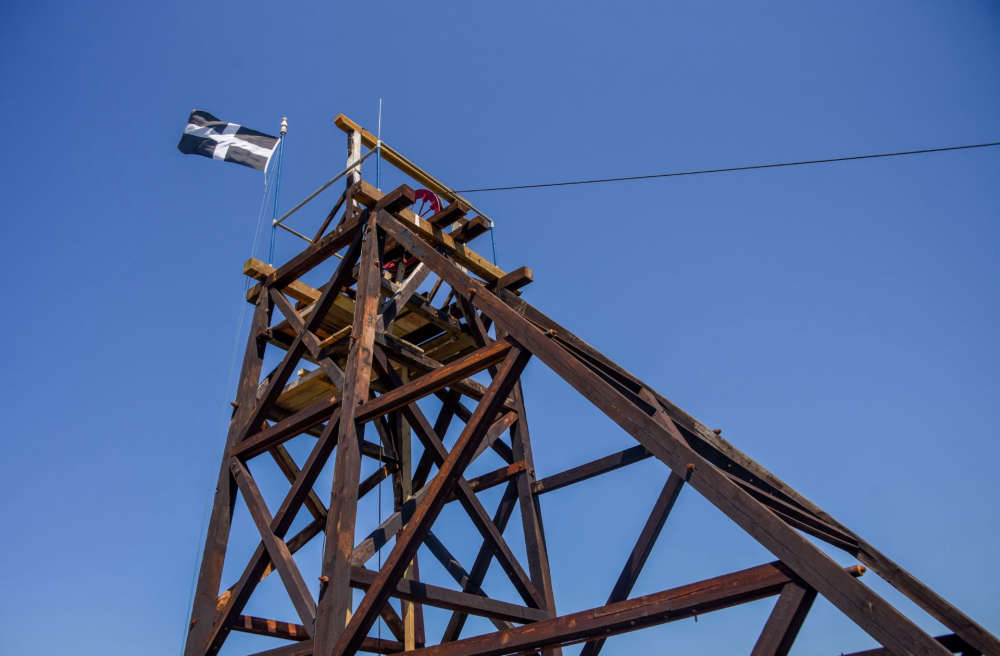
A new headframe was erected above Engine Shaft at the turn of the 20th century. This structure contained four compartments, which provided access for miners and materials, pumped water from 40 fathoms deep and supplied ventilation for the underground workings. It collapsed in 1934.
Although it had long been KEM’s ambition to erect a replacement, it was not until 2023 that an opportunity arose. The owner of one of the last remaining wooden headframes in Cornwall approached the museum to ask whether they would be willing to take on its renovation.
This headframe was originally built at Geevor and erected at Cligga Head, near St Agnes, in 1962. It was later moved to Nangiles in the Wheal Jane area, then on to Wheal Concord at Skinners Bottom in 1980. This latter site became the home of Cornish Firewood, owned by Jason Thomas, and it is the Thomas family who offered a long‑term loan to enable the headframe to be restored and installed at KEM.
From dismantling, cleaning and retaining as much of the original fabric as possible to repairing and installing timbering, concreting foundations and reassembling the structure to its historic design, KEM’s volunteers - led by Trustee Graham Sowell - laboured patiently for thousands of hours to reach the moment in February when the headframe was re‑erected, once again towering proudly over Troon for the first time in 92 years.
Mike May was a key member of the volunteer team. He was an apprentice at Geevor in 1962 who helped to build the original headframe, and his expertise proved invaluable.
“On behalf of KEM’s Trustees, I would like to thank Jason Thomas and his family for the long‑term loan of this important piece of Cornish mining heritage, which now helps us to highlight the relationship between mining underground and the winding mechanism and ore processing in the mill, which our museum so aptly demonstrates,” said Chair of the Trustees, John McDonnell.
“From all those who supported the initial seed funding through our GoFundMe page and the Association of Industrial Archaeology for its generous grant to our many supportive sponsors and wonderful KEM volunteers who have achieved something truly remarkable for Cornish mining heritage in erecting the first headframe for 50 years, we convey our immense gratitude to them for making this possible and for helping us to ensure a sustainable future for our much‑loved museum as we celebrate our quarter century.”
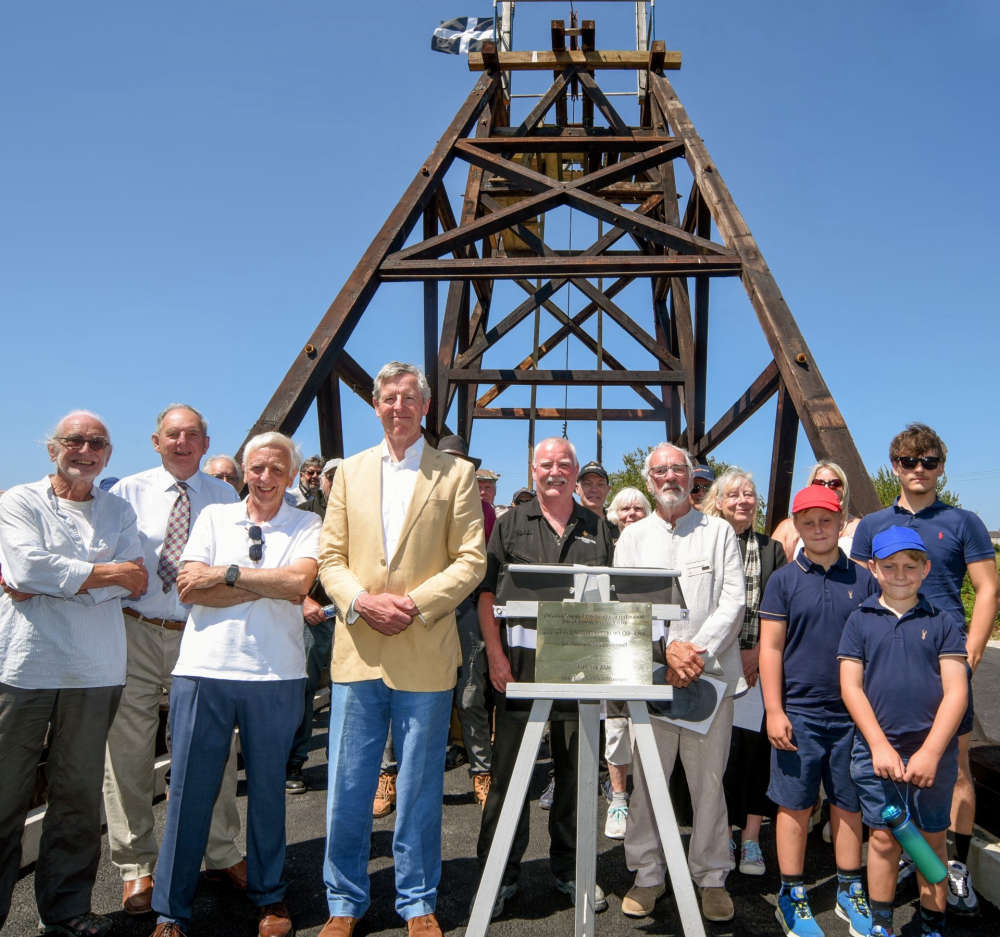
The celebratory event was attended by invited guests, sponsors, Trustees and volunteers.
KEM is open until the end of October on Mondays, Tuesdays, Wednesdays and Saturdays. School visits are by appointment.
Volunteers are the lifeblood of KEM, guiding visitors and contributing to the preservation and development of this unique site. The museum is now seeking new people to take on flexible estate administration and shop/reception roles for a few hours per week. Please visit www.kingedwardmine.co.uk/about/volunteering to sign up.
To find out more about King Edward Mine Museum and its history, visit www.kingedwardmine.co.uk.
 Eco Park turns up the volume with free gigs every weekend through July and August
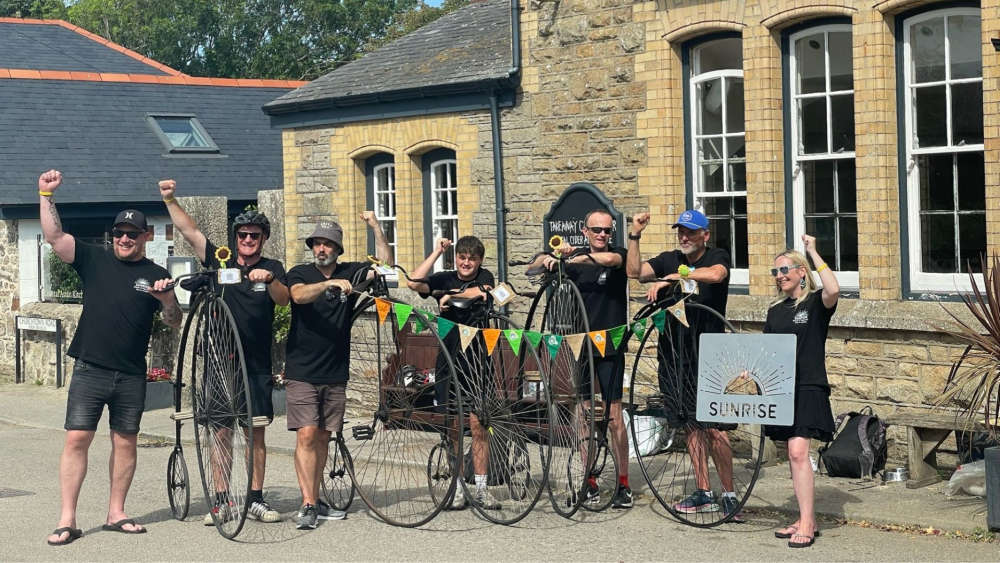 Five riders finish gruelling Penny Farthing ride to support mental health in Cornwall
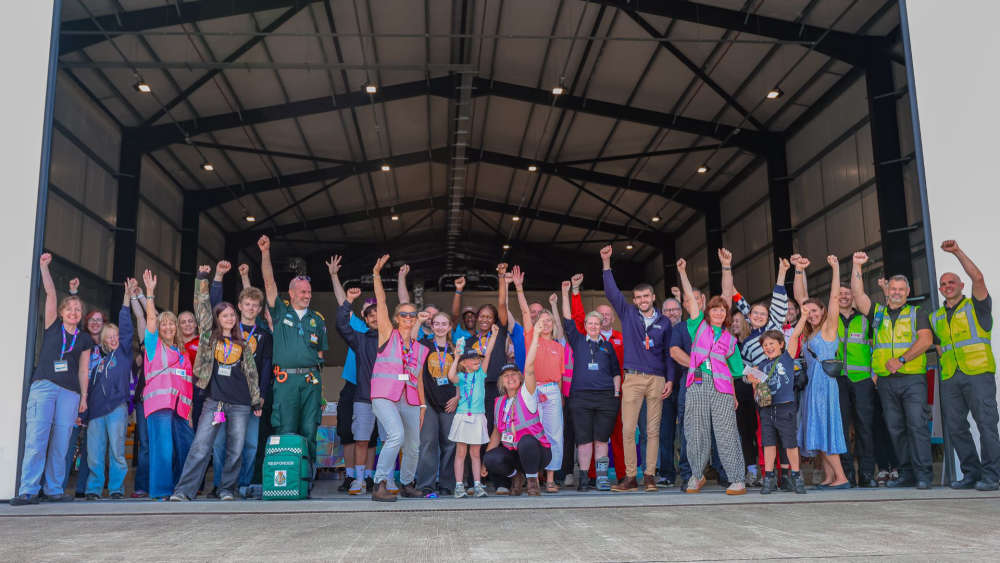 Cornwall’s girls take flight as Reach for the Sky celebrates its biggest year yet
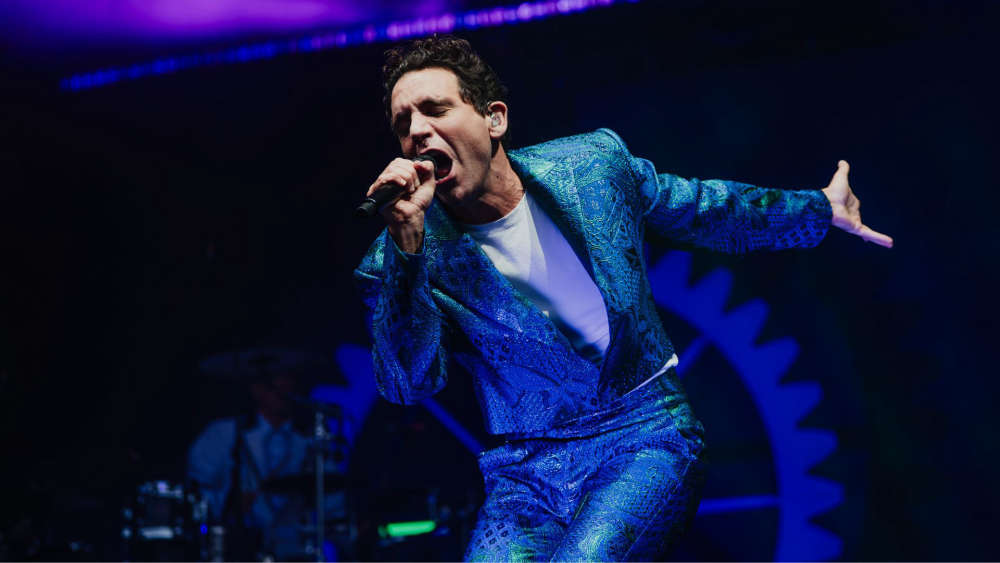 Mika lights up the Eden Sessions with fun and colour
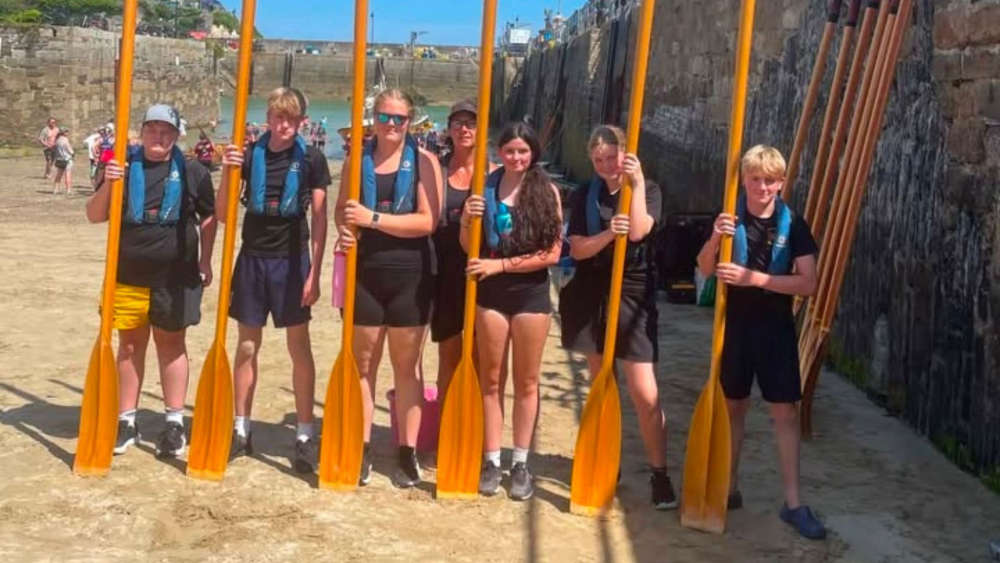 Junior gig crew defy the odds with standout U16s performance
 One person trapped after two-vehicle collision near Helston
 Thousands expected as Stithians Show returns today
 Eden Sessions celebrate full-circle moment as The Maccabees return to the stage